
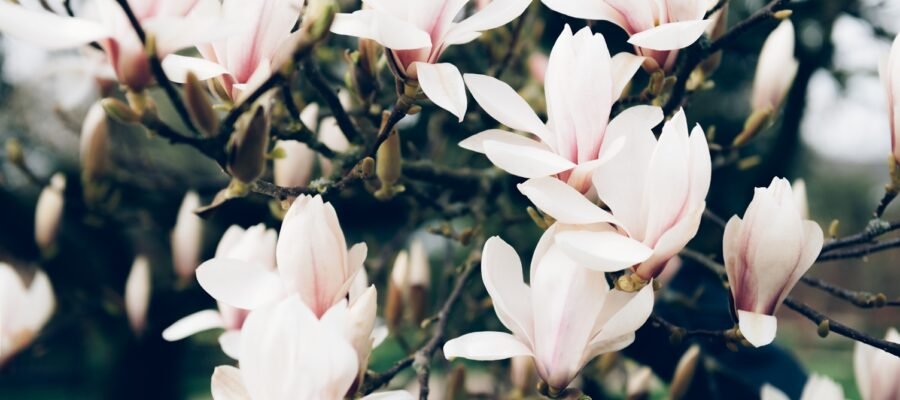
The Magnolia tree is one of the most fascinating and well-known. So iconic that it is represented in many contexts. Its white flowers symbolize purity, while the pink ones express modesty. In the language of flowers, giving a Magnolia means recognize strength and dignity in the person to whom we donate it. A refined, elegant and resistant tree: a true symbol of beauty and character.
Magnolia: characteristics and origins
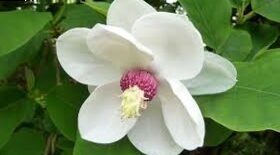
Deciduous magnolia is a brightly colored and fragrant ornamental plant widely used in gardens. It belongs to the Magnoliaceae family, which includes over 80 varieties, native to the southern United States, Japan, China, and Korea.
Magnolia flowers come in a rich variety of colors, ranging from soft white and light pink to deep magenta. Some varieties have creamy white, yellow, or deep purple flowers. Flower shapes also vary: some varieties produce star-shaped flowers, while others have cup-shaped or goblet-shaped flowers. The flowering period is relatively long, with some varieties blooming again after several months. In areas prone to late frosts, it is recommended to choose late-blooming varieties, as early buds are susceptible to frost damage, affecting flowering.
- Leaves: oval, intense green in colour, they emerge after flowering and are deciduous.
- Flowering: occurs in spring, with large and fragrant flowers, composed of 6-9 petals. The colors vary from white to pink, up to more intense shades.
Types of Magnolia based on the shape of the flower
Magnolias are distinguished by the variety of their blooms, which can have different shapes. Let’s discover the main ones:
Cup-flowered magnolias
Magnolias with cupped flowers have an upright and collected structure, similar to a tulip. The fleshy and well-defined tepals give a refined and harmonious appearance.
- Examples: Magnolia soulangeana, Magnolia liliiflora
- Flower color: from pure white to intense pink, up to purple shades.
- Flowering period: early spring, often with a second flowering at the end of summer.
Saucer flower magnolias
The saucer-shaped flowers open completely, showing the inside and creating a scenographic effect.
- Examples: Magnolia grandiflora, Naked magnolia
- Flower color: creamy white, light yellow, sometimes with greenish shades.
- Flowering period: late spring and summer.
Cup-flowered magnolias
The calyx flower varieties have a more compact flowering, with petals slightly inclined towards the inside.
- Examples: Magnolia campbellii, Magnolia sargentiana
- Flower color: bright pink, magenta, intense purple.
- Flowering period: early, between late winter and early spring.
Star-flowered magnolias
Star-flowered Magnolias have numerous thin tepals, which open up to create an expanded, light shape.
- Examples: Star magnolia, Magnolia kobus
- Flower color: white, pale pink.
- Flowering period: very early, between February and March.
Where and when to plant Magnolia
Magnolias are well suited to growing in full groundbut more compact varieties can be planted successfully even in pots.
Most Magnolias prefer:
- an exposure in full sun
- fertile, moist and well-drained soil with a slightly acidic or neutral pH
- a position sheltered from the wind
However, if ideal conditions are not available, some varieties can adapt to different soils:
- For dry, alkaline soil: choose Magnolia grandiflora or Magnolia delavayi.
- For humid and alkaline soils: Magnolia kobus, Magnolia × loebneri, Magnolia sieboldii, Magnolia stellata and Magnolia wilsonii are more suitable.
- For areas with particularly humid soil: the Magnolia grandiflora and Magnolia virginiana species could be a good choice.
- For environments with partial light or light shade: late-flowering species such as Magnolia wilsonii and Magnolia sieboldii are best suited.
Before buying a Magnolia, it is always advisable evaluate its final dimensionsas some varieties can become very large and require large spaces. However, there are also more compact options, which do not exceed 2 meters in height and are perfect for smaller gardens.
The best time to plant Magnolias is between autumn and springavoiding times when the ground is frozen.
How to grow Magnolia
It is a plant rustic and easy to growsuitable for both open ground and pot cultivation. In the first months of life it requires regular watering, while as an adult it tolerates drought better.
Used for his large spectacular flowers which bloom in spring and summer, the Magnolia is a plant much appreciated by greenery professionals and others. Although it is hardy, it prefers a sheltered location and moist but well-drained soil. Some varieties need a slightly acidic or neutral substrate. Most Magnolias are deciduouslosing its leaves in winter, but there are also evergreen species with shiny foliage throughout the year.
- Exposure: prefers one position sunny or of half shadeA.
- Temperature: resists cold and low temperatures well.
- Land: prefers well-drained and humus-rich substrates.
- Irrigation: in the early years it is essential to keep the soil constantly moist, with regular watering. Once well established, the Magnolia becomes more drought tolerantbut in periods of prolonged absence of rain it is advisable to irrigate it, especially if it grows in light, draining soil. If planted near a wall, it may need additional watering as it is less exposed to rain. Potted Magnolias tend to dry out more quicklytherefore they require more frequent watering during the growing season.
Magnolia care and maintenance
- Fertilization: it does not require specific fertilizers, but a slow release fertilizer in February can promote flowering.
- Pruning: generally not necessary for deciduous varieties, but useful for removing dry or damaged branches. If necessary, intervene after flowering with light cuts, avoiding drastic pruning that could compromise growth. In the case of specimens that are too large or messy, distribute the interventions over several years to avoid stressing the plant.
- Planting: it can be planted at any time of the year, if grown in pots.
Magnolia in pots: tips for cultivation
The potted Magnolia should be placed in a sheltered place, away from direct sun, with a constant temperature and well-drained soil.
Propagation of Magnolia
Magnolia can be propagated in several ways. The simplest technique is the margotwhile the seminar It takes longer but can give good results. There semi-hard wood cutting it is an effective method, to be carried out in summer, but it can be complex as it requires controlled humidity and temperature conditions to encourage rooting.
Magnolia diseases and pests
Furthermore, it is sensitive to little familya fungus that causes root rot.
late frosts can compromise flowering, making the buds vulnerable to frost gray mold. Additionally, root rot can be caused by several fungi, including mushroom family and the Phytophthora. Other pathogens, such as shelf fungi or honey fungus, can also attack the plant, especially if it is already weakened by unfavorable conditions. Leaves can yellow due to excessively alkaline soils, while yellowing or browning can result from water stress.
latest posts published

How the chair influences the decor of a space

Ideas for decorating your home for Christmas
Winter fabrics for home decoration: ideas and advice
Furnishing farmhouses and barns: rustic elegance in Tuscany

Flos Portugal luminaires: sophisticated Italian design
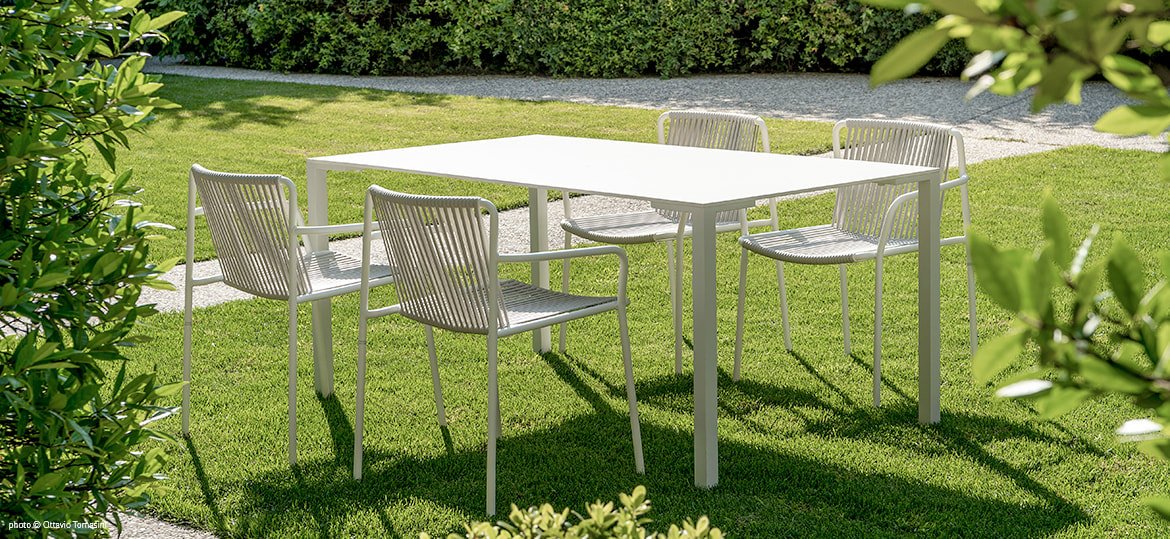
Pedrali Outdoor: the complete guide to Italian furniture and design

Rugs and carpets – Tailored elegance and comfort

Design of the layout of the Miramaia Shopping Food Court

Comfortable chair or correct posture?