
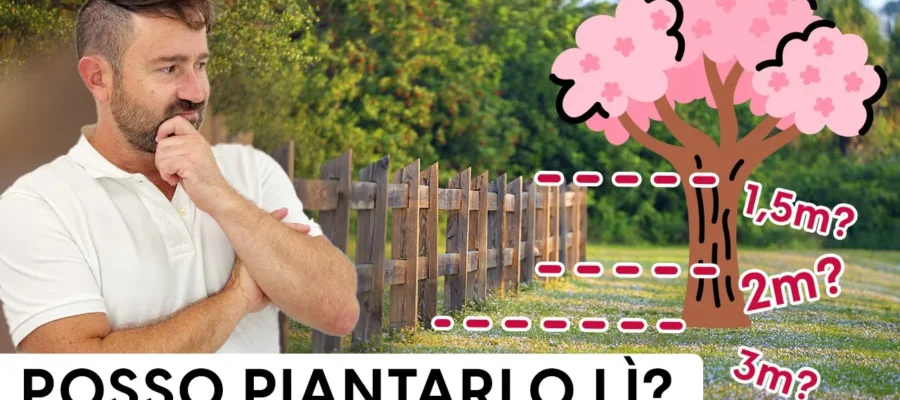
Have you ever heard that in Italy among the more frequent arguments between neighbors Are there border disputes? Not so much for the walls or fences, but for the trees. That elm tree that extends its branches in the next garden, the laurel hedge that blocks the light, the cherry tree that bears such inviting fruit… but who does it belong to?
Yes, because behind every branch that sticks out or root that extends, a potential court case can hide. And this is precisely why the Civil Codein articles 892 to 896, he decided to bring order.
What the Civil Code says: introductory provisions
The most important reference is Articles 892-896 of the Civil Code.
The starting point is: «Anyone who plants a tree near the boundary of a piece of land must adhere to the distance prescribed by the statute; if there is no such provision in the statute, then local custom shall prevail. If neither is prescribed, then the following distances shall apply…»
In other words: First, you should check municipal ordinances and local custom, which always take precedence over the Civil Code and are often stricter than state laws. These regulations can even lead to the transplanting of trees in case of disputes.
Therefore, it’s possible to find situations where, in one municipality, a hedge grows right up to the boundary and goes unchecked, while in a neighboring municipality, a peach tree is cut down for being planted half a meter too close to the boundary.
Where can you find this information? Local police or building management departments can help. Agricultural engineers, like those I consulted, are also highly specialized experts. Now that you have the necessary knowledge, good luck!
Why do these rules exist?
The rules are not only designed to protect personal space, but to:
- avoid them roots invade other people’s land,
- prevent him trees deprived of light and view the neighbor,
- maintain good coexistence between neighbors.
This applies to trees planted in the ground and even to those in tubs dug into the ground.
However, it does not apply to plants in pots or planters.
How are legal tree distances measured?
The legally mandated minimum distance between trees is calculated from the boundary line to the planting point (if grown from seed) or the distance from the base of the trunk at the time of planting.
And this is precisely the first problem: adhering to the minimum distance requirement does not prevent someone from «forcing» plants to grow onto neighboring plots.
I would like to ask everyone: do you think legislators had any understanding of plants when drafting the provisions on planting distance in the Civil Code? My answer is no. In fact, as we often see, the Supreme Court has had to intervene to restore order and clarify certain terms, such as the precise meaning of «tall tree.»
The problem is that the law uses botanically imprecise classifications (tall trunk, medium trunk, shrub) that fail to reflect the complexity of plants. For example, in Brescia, a flexible banyan tree is merely an indoor plant, but in Sardinia, it can grow into a tree. Or look at the uniquely shaped strangler fig bonsai here, and the enormous strangler fig in Indochina. The same principle applies to shrubs such as hornbeams, laurels, hazelnuts, or rowan: although they are called «shrubs,» they can grow into plants 7-12 meters tall over time.
New plantations: distances to respect
In the absence of municipal regulations or local customs, what is established by theart. 892 cc.
Tall trees: 3 meters from the border
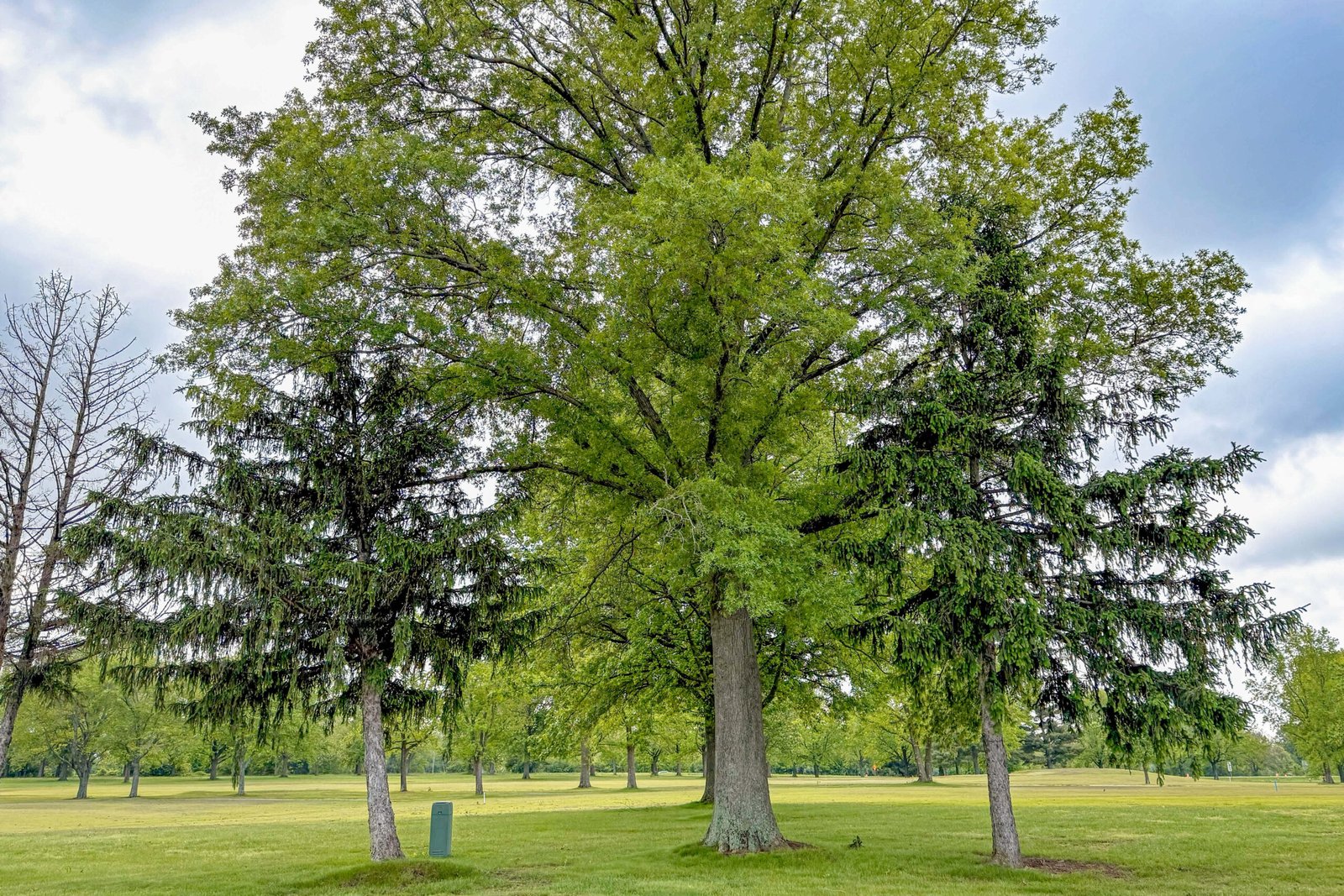
Walnut, chestnut, oak, pine, cypress, poplar, elm, and sycamore (the very species listed in the law) are considered tall trees. These trees must be planted three meters from the boundary line.
However, here’s the problem: legislators claimed to be distinguishing between tall trees, medium-sized trees, and shrubs, as if their growth were always predictable. This is not the case. The Supreme Court ruled that the following tree species should be considered tall trees:
- trees which, in the climatic zone in which they are planted, they easily exceed 6–7 meters in height,
- or those with single trunk at least 3 meters high before the first branching.
Yet there is no shortage of doubts. Apple trees, pears, plum trees, peach trees, elderberries, evonimums theoretically they would not be tall, but a bare apple tree, if left to grow, easily exceeds 10 metres.
And there birch? Botanically it is classified as tall, but if trained as a willow head it can remain under 3 metres. However, the Court of Cassation maintains that the natural potential counts: therefore it remains tall.
The exception of chestnut and alder trees
There is an interesting exception to the regulations regarding the minimum distance between trees and land boundaries.
Article 892 of the Civil Code stipulates that chestnut and alder trees grown from rootstock can be planted within one meter of the land boundary. This is because, through regular pruning of the trunk base, they can maintain a low and controllable growth habit, neither blocking sunlight nor causing excessive impact on neighboring land boundaries.
However, the question arises: why doesn’t this principle apply to other lower-growing trees, such as topped birch trees or other species whose shape is maintained through targeted pruning?
Minimum distance for non-tall trees
According to the law, this category includes: plants that branch within 3 meters of height.
For them, the minimum distance from the border is of 1.5 metersunlike tall trees which must comply with greater measures.
Vines, shrubs and low plants: minimum distance of 0.5 metres
For screws, ornamental shrubs And small fruit plantsTHE law on the distance of plants from the border provides a more flexible rule.
When these they do not exceed 2.5 meters in heightthey can be planted at just 50 centimeters from the border.
This is the typical case of small domestic orchards, low hedges or vine espaliers which do not create shade or damage to nearby properties.
Exceptions for some hedges
Be careful though: not all hedges follow this rule.
THE black locust hedgesfor example, they must comply with a minimum distance of 2 meters from the borderas they develop more vigorously and tend to invade adjacent land.
When we can ignore distances
In some cases, the minimum distance between trees and land boundaries stipulated in the German Civil Code (BGB) does not apply.
For example, if there is a solid wall next to the land boundary (even if the wall belongs to only one neighbor), it is permissible to plant trees or hedges closer to the boundary, provided they are regularly pruned and their height does not exceed the height of the wall.
Generally, trees and hedges planted along walls cannot exceed 3 meters in height (Article 878 of the German Civil Code). However, if a higher wall has been permitted, plants can also grow to this height.
For trees planted too close together, it is better to prune them to keep their height within the prescribed limits than to remove them.
However, in other cases, neighbors have the right to demand the removal of plants that do not meet the legal minimum distance. Therefore, with proper pruning and careful maintenance, the problem can usually be resolved without drastic measures.
Existing plants and adverse possession: what the law provides
One of the most delicate situations concerns the existing plants too close to the border. In these cases, it must be assessed whether the owner has acquired the right to keep them at a distance lower than the legal one.
This right can be obtained in three ways:
- by contractamong neighbors;
- for the father of the familythat is, when the distance has been established before the division of land;
- for twenty-year adverse possessionif the neighbor he was unopposed for at least 20 years in the presence of the tree.
If the right has not been acquiredthe neighbor can ask that the plant be cut or reduced at the permitted height.
If instead adverse possession or other legitimate title was recognized, the tree can staymom it cannot be replaced if he dies or is shot down, except that is part of a row along the border.
A recent ruling by Court of Cassation furthermore established that a tree at a short distance, legitimized by adverse possessionit can even prevent the neighbor from building closer than the prescribed distance.
Encroaching branches: neighbor’s rights
The owner of a land can force the neighbor to cut any overhanging brancheseven if the tree is planted at a legal distance.
Roots on your neighbor’s land: how to intervene
THE roots entering neighbor’s land they can be cut freely along the border line, without the need for notice or authorization.
Fruits and properties: who collects them
I naturally fallen fruits on the neighbor’s land they belong to the owner of the land where they fall.
But be careful: i fruits still attached to the overhanging branches they remain owned by whoever owns the tree. Alone when they fall they become the neighbor’s.
In some areas, the local uses they can allow to enter other people’s land to reap the fruitsbut only if this right is expressly provided for.
Conclusion
In summary, the legal distances for planting trees and hedges near borders are established by Civil Codebut the legislation presents numerous exceptions, contradictions and interpretations.
It’s not uncommon that disputes between neighbors on plants too close to the border end up in courtespecially when it is not clear whether adverse possession, pruning or border wall rights have been respected
latest posts published

How the chair influences the decor of a space

Ideas for decorating your home for Christmas

Winter fabrics for home decoration: ideas and advice
Furnishing farmhouses and barns: rustic elegance in Tuscany

Flos Portugal luminaires: sophisticated Italian design
Pedrali Outdoor: the complete guide to Italian furniture and design

Rugs and carpets – Tailored elegance and comfort

Design of the layout of the Miramaia Shopping Food Court

Comfortable chair or correct posture?