Since the tax is applicable without a means test, it can represent a certain amount, particularly for owners with modest incomes. To find out whether a garden shed is subject to the construction tax, it is necessary to refer to the authorization regime to which its construction is subject. This regimen depends on the size of your shelter.
The development tax applies only to covered and enclosed areas. Open constructions such as terraces and pergolas are therefore excluded.
| Garden shed surfaces – General case | Height less than or equal to 12 m | Height greater than 12 m |
|---|---|---|
| Surface area and footprint less than or equal to 5 m² | No permission | Prior declaration of works |
| Surface area and dimensions between 5 m² and 20 m | Prior declaration of works | Building permit |
| Surface and overall dimensions greater than 20 m² | Building permit | Building permit |
| Surfaces of the garden shed – Sectors and protected areas | Height less than or equal to 12 m | Height greater than 12 m |
|---|---|---|
| Surface area and footprint less than or equal to 5 m² | Prior declaration of works | Building permit |
| Surface area and footprint between 5 m² and 20 m² | Prior declaration of works | Building permit |
| Surface and overall dimensions greater than 20 m² | Building permit | Building permit |
The development fee now applicable
As soon as accommodation facilities are subject to a prior declaration or building permit, they fall within the scope of the building tax..
However, for the municipal part of the tax to be applicable to construction, the municipality must have decided on its application. This decision is automatically applicable in municipalities with a local urban plan (PLU) or a master plan (POS) and in urban communities. In the other municipalities its institution must have been the subject of a resolution by the municipal council. For the decision to be applicable, it must have been adopted by November 30 of the previous year.
Find out the amount of the development fee
Development fee = building area x fixed value x rate set by each of the communities.
In 2016, the flat rate value was set at 701 euros per m², increased to 795 euros in Île-de-France.
After a 3.8% increase in 2019, the development tax will see a further increase in 2020.
In 2021 and for the sixth consecutive year, the development fee amount continues to increase.
Evolution of the fixed value amount
| 2016 | 2017 | 2018 | 2019 | 2020 | 2021 | |
|---|---|---|---|---|---|---|
| Outside Île-de-France | €701 | €705 | €726 | €753 | €759 | €767 |
| In Île-de-France | €795 | €799 | €823 | €854 | €860 | €870 |
Note: some systems such as swimming pools or photovoltaic panels are subject to specific amounts:
- €200 per m2 of swimming pool
- €10 per m² of panel surface
Pay your development fee
Applicable without resource conditions, the development tax applies only once.
Amount less than €1,500: The tax is paid in a single payment, the 12th month following the work authorization.
Amount exceeding 1,500 euros: the tax can be modulated in two instalments.
- 1st payment in the 14th month following authorization
- 2nd payment in the 26th month following authorization
Carry out a simulation with the simulator set up on the website of the Ministry of Territorial Cohesion and Relations with Local Authorities.
To find out more, consult the site service-public.fr on the development tax
conlusion
The development tax associated with building a garden shed is an important factor that homeowners should carefully consider before starting any project. Since this tax is applied without a means test, it can represent a significant financial burden, especially for those with modest incomes. Understanding how and when this tax applies allows property owners to plan more effectively and avoid unexpected expenses.
A key element in determining whether your garden shed is subject to this tax lies in the authorization regime required for its construction. This regime is directly linked to the size and characteristics of the structure. Larger or enclosed constructions are more likely to require formal authorization and, consequently, fall under the scope of the development tax. On the other hand, smaller or less complex projects may be subject to lighter administrative procedures or even exemptions, depending on local regulations.
It is also essential to note that the development tax only applies to covered and enclosed spaces. Open structures such as terraces, pergolas, or similar installations are not included, which can influence design choices for those looking to optimize costs. By understanding these distinctions, homeowners can make informed decisions that align with both their budget and their intended use of the space.
In conclusion, being aware of the rules governing the development tax is crucial when planning a garden shed. By considering the size, structure, and authorization requirements, you can better anticipate costs and avoid surprises. Careful planning ensures that your project remains both financially manageable and compliant with regulations.
latest posts published
4 ideas to protect a summer kitchen from the sun
Why choose a roll-up pool cover? Advantages and disadvantages
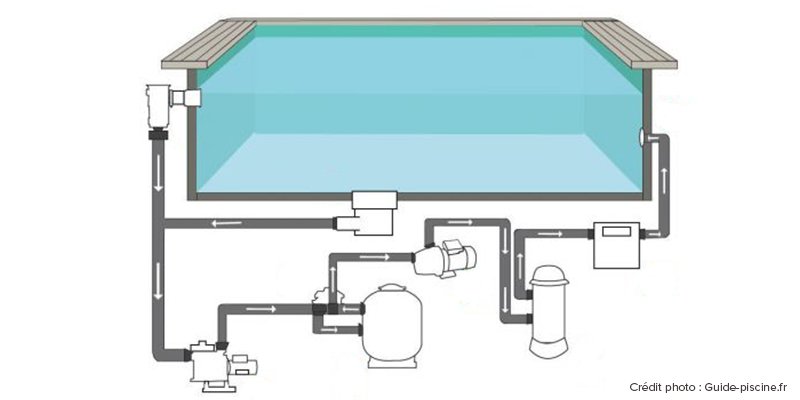
12 questions/answers on swimming pool filtration
Transform your garden into a bohemian and natural corner

Organize your balcony and terrace with a small garden furniture
Volcania EDA flowerpots to decorate your terrace or balcony
Which XXL pots to choose for an olive tree or a palm tree?
Our Top 3 for perfect lighting!

Which above ground pool should I choose based on my needs and budget?