
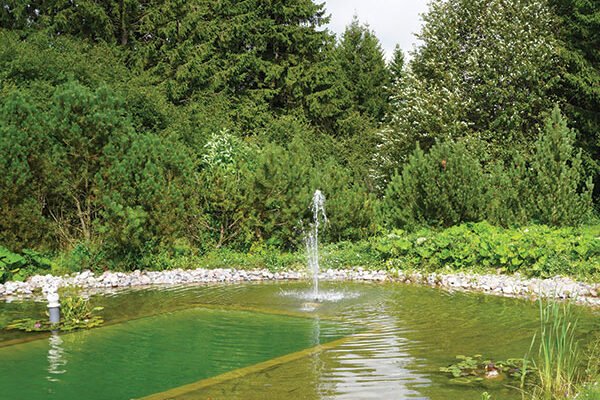
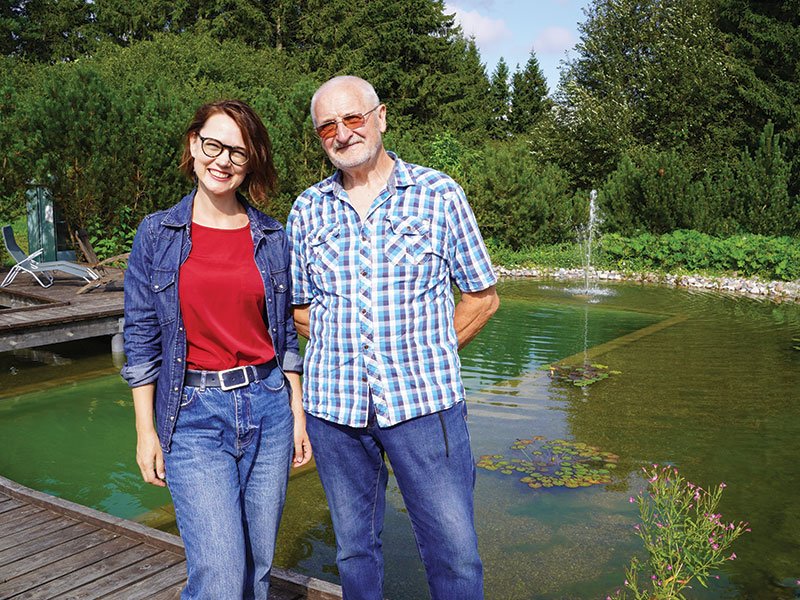
An eco-pond is a natural outdoor swimming pool, clean without chlorine or other chemicals, suitable for swimming, plants and fish – isn’t it the type of pond that many people dream of in their garden? Antanas Žukauskas, who lives in the Kretinga district, decided to make this dream come true and installed an eco-pool in his backyard. As you will see in this article, it is indeed possible.
This text was prepared according to the LRT show «Čia mano sodas», you can watch the recording by clicking here.
What is an ecopond?
It is generally believed that an eco-pond is a peat, in which clear water is maintained not by chemicals poured into the water, but by special plants planted nearby and acting as a kind of filter.
However, in reality, the system is much more complicated, more expensive, and there is not much ecology here. First of all, it’s not a turf with sand at the bottom: it’s an artificial body of water, which means its bottom is concreted and completely insulated. This is why a more accurate name would not be ecobridge, but ecobasin.
Additionally, a special system is needed to maintain air circulation and continuously filter the water. Due to the mixing of water in eco-pools we often see additional waterfalls, fountains or an artificial stream.
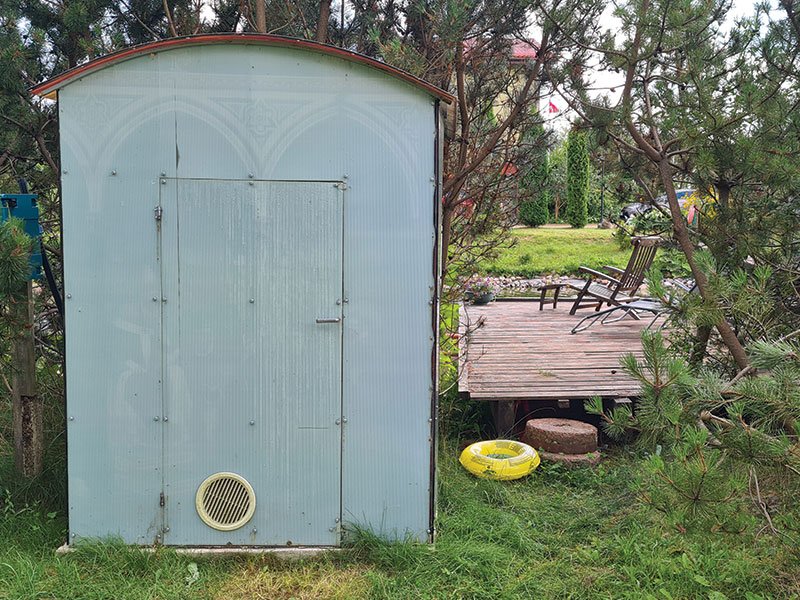
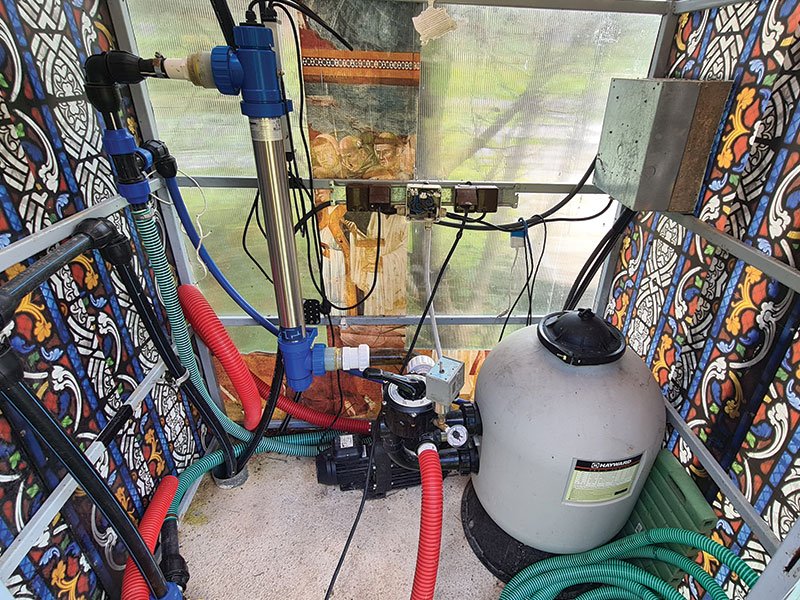
Often a terrace or a separate building is installed just to hide the equipment. Antanas shows that in his yard behind the bushes there is a special building for equipment. The rest of the equipment is hidden under a layer of pebbles and under water.
Well, as far as plants are concerned, the truth is that plants that can survive growing in water are selected. They perform a filtering function together with the gravel layer.
Many imagine eco-pools too naively: I will plant plants at the edge of the pond and they will filter the water. Therefore, I was surprised that Antanas actually designed and installed an eco-pool himself respecting all the rules (including the size of the pool, the depth, the equipment, the flow that ensures circulation, etc.), albeit sometimes with self-produced solutions.
Ecopond from experience: Antanas’ advice
Antanas has read a lot of literature and tried different things, so I’m very curious to know his experience.
He began the work by digging a hole, concreting and waterproofing: a special film is laid to prevent water from penetrating the ground. Specialists were hired for these jobs.
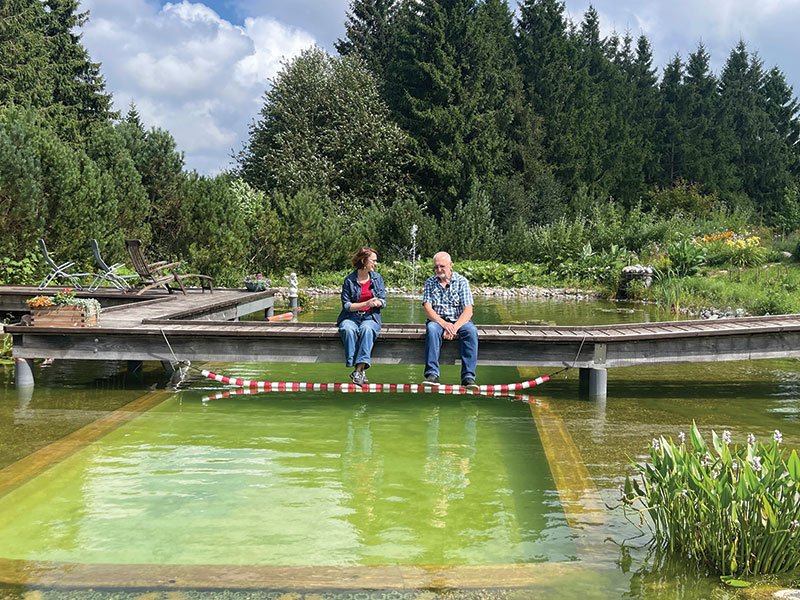
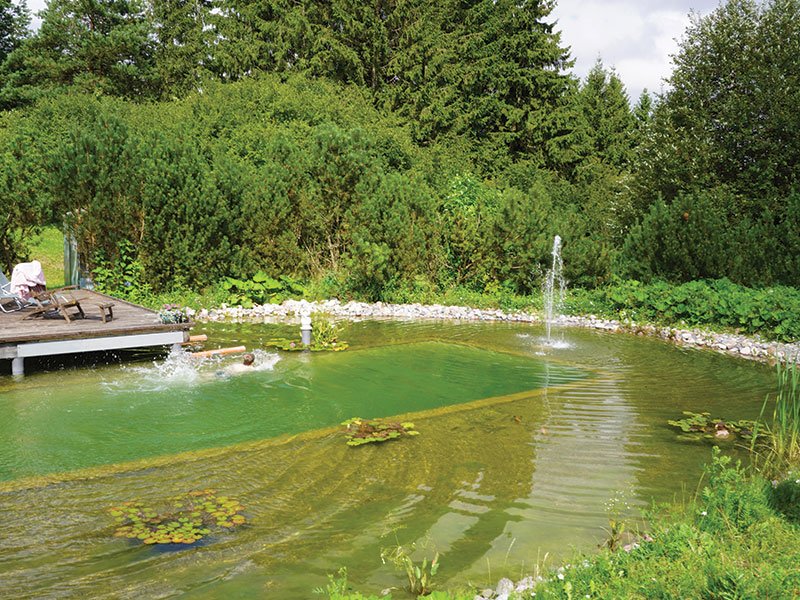
The central part of the pool is suitable for swimming, its depth ranges from 70 cm to 210 cm, gradually deepening. In the lateral parts of the plants the depth is approximately 60 cm.
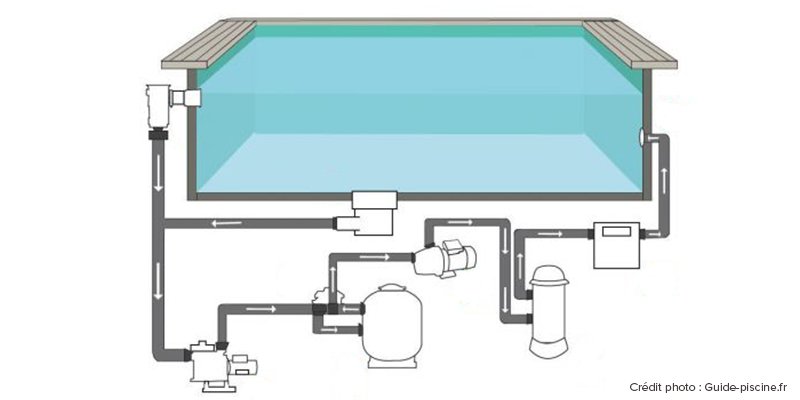
An eco-friendly swimming pool requires a complex filtration system that maintains the circulation and cleanliness of the water. Antanas himself took care of special equipment and filters. Additionally, they installed a stream and fountain to keep the water moving.
A thing has been created that performs the function of a «skimmer»: it collects leaves and other dirt on the surface of the water.
Additionally, a sand filter and quartz lamp are used to prevent the growth of bacteria.
Aquatic plants in the ecopool
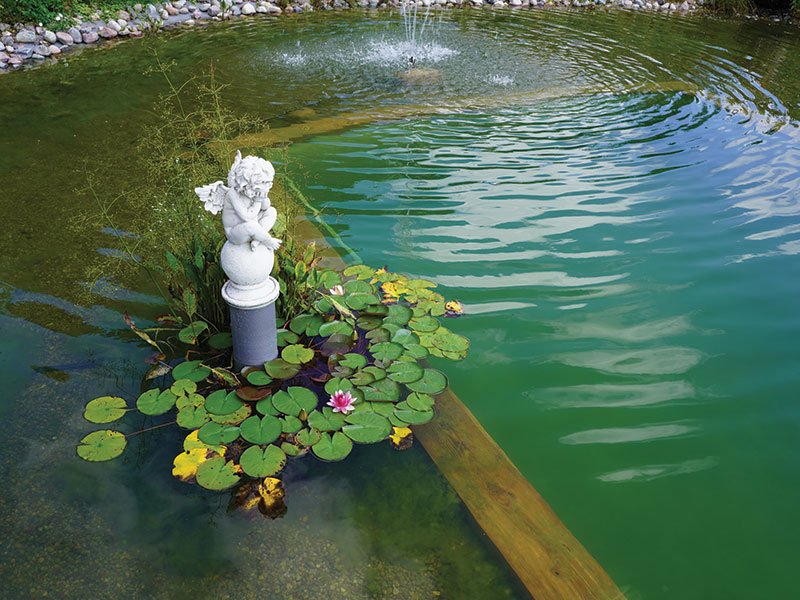
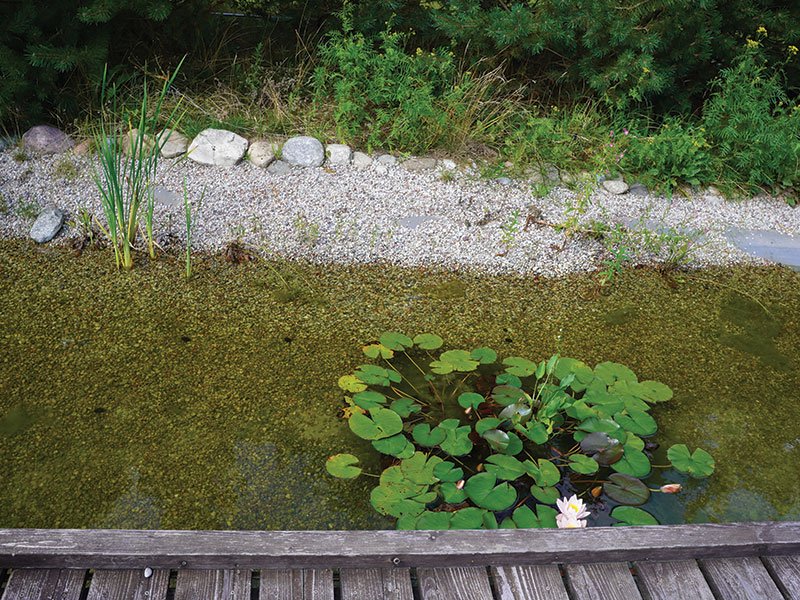
An area is formed around the pool with a layer of pebbles and aquatic plants that naturally filter the water. Antanas is still experimenting with plants: he says that in the long term they will only increase here.
Lilies provide some shade, which is great for the cooling effect of the water.
Ecopond: errors during installation
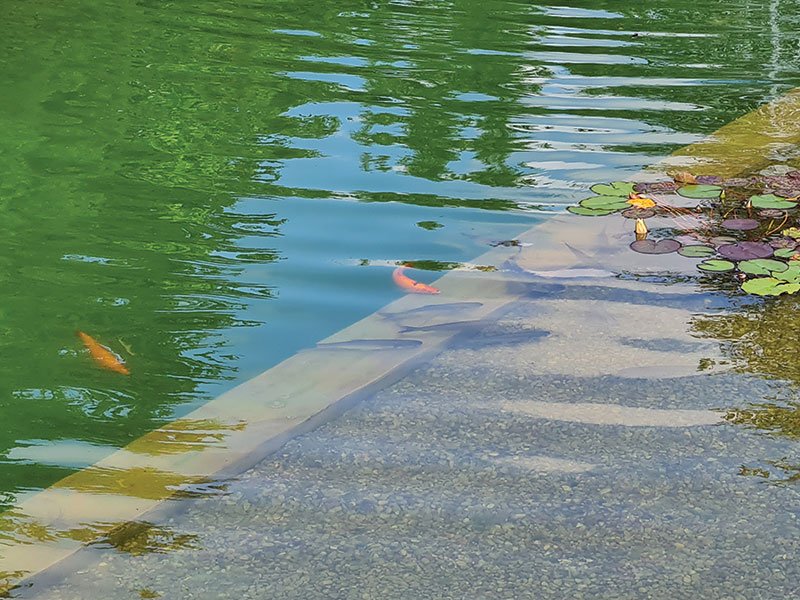
Antanas shares his experience: One of the biggest mistakes he made was letting in the wrong fish. Although grass carp or carp are often assumed to clean water, Antanas evaluates their benefits in two ways.
For one thing, they really kick up mud. On the other hand, they themselves create waste that must be cleaned up.
So it’s fun to see the fish in the ecopool, they eat mosquito larvae, but you need to make sure that the water filter system properly removes the dirt left by the fish, otherwise you have to clean some of the mud yourself.
Maintenance of the eco-pool
Do you think that an eco-pool is a natural body of water and lives on its own? This is definitely not the case, it needs a lot of maintenance.
Antanas says: it is necessary to regularly clean the filters, take care of the plants and eliminate the algae that form. During the summer Antanas dedicates one day a week to raking the algae with a special rake.
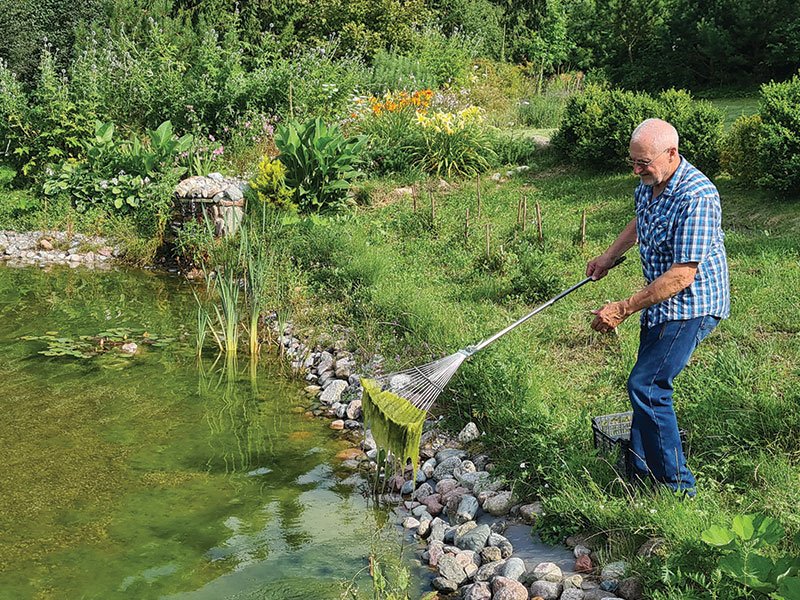
You won’t say anything, there’s really a lot of maintenance. Well, an eco-pond in the yard is not for everyone: Antanas is satisfied, because he designed it himself, installed it himself, and now fish swim, frogs dance, and most importantly, grandchildren splash happily in the water.
Anton’s experience shows that after reading the literature and understanding the intricacies of installing an eco-pool, it is really possible to install it yourself. If you want an eco-pool, be ready to learn, be interested and experiment. And the end result will definitely be worth it.
READ ALSO:
“Growing water lilies: what to do to heal and bloom abundantly«
“The most beautiful plants for a farm near a pond, lake or river”.
RELATED COURSES:
In the courses «Pond Installation» – installation of an artificial or natural pond: in this workshop you will learn technical solutions and receive a list of plants.
latest posts published
4 ideas to protect a summer kitchen from the sun
Why choose a roll-up pool cover? Advantages and disadvantages
12 questions/answers on swimming pool filtration
Transform your garden into a bohemian and natural corner

Organize your balcony and terrace with a small garden furniture
Volcania EDA flowerpots to decorate your terrace or balcony

Which XXL pots to choose for an olive tree or a palm tree?
Our Top 3 for perfect lighting!
Which above ground pool should I choose based on my needs and budget?