
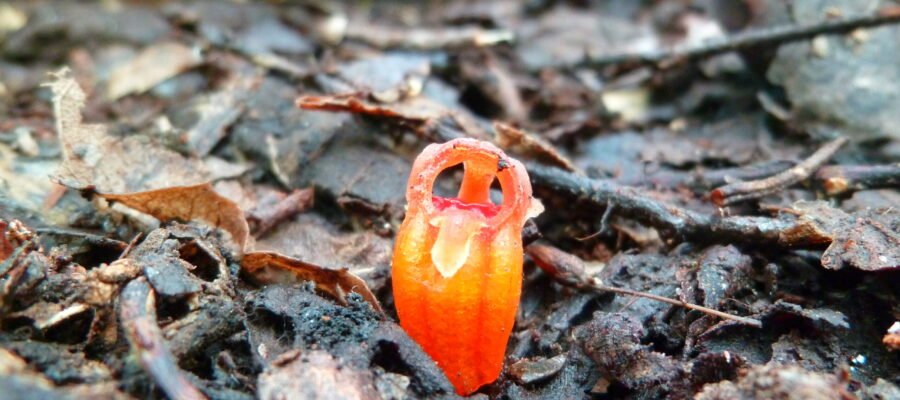
It’s always good news when a living being we thought was extinct turns out not to be. Of course, if we were to discover that Dilophosaurs roam the Brescia countryside we wouldn’t be so calm, but the mythical reptiles are not part of today’s history. Even better if the living being returning from the afterlife is a really very special plant: it doesn’t photosynthesize, it lives underground, it has a flower that looks like a lantern… here’s the story of Thismia kobensis.
The genus Thismia
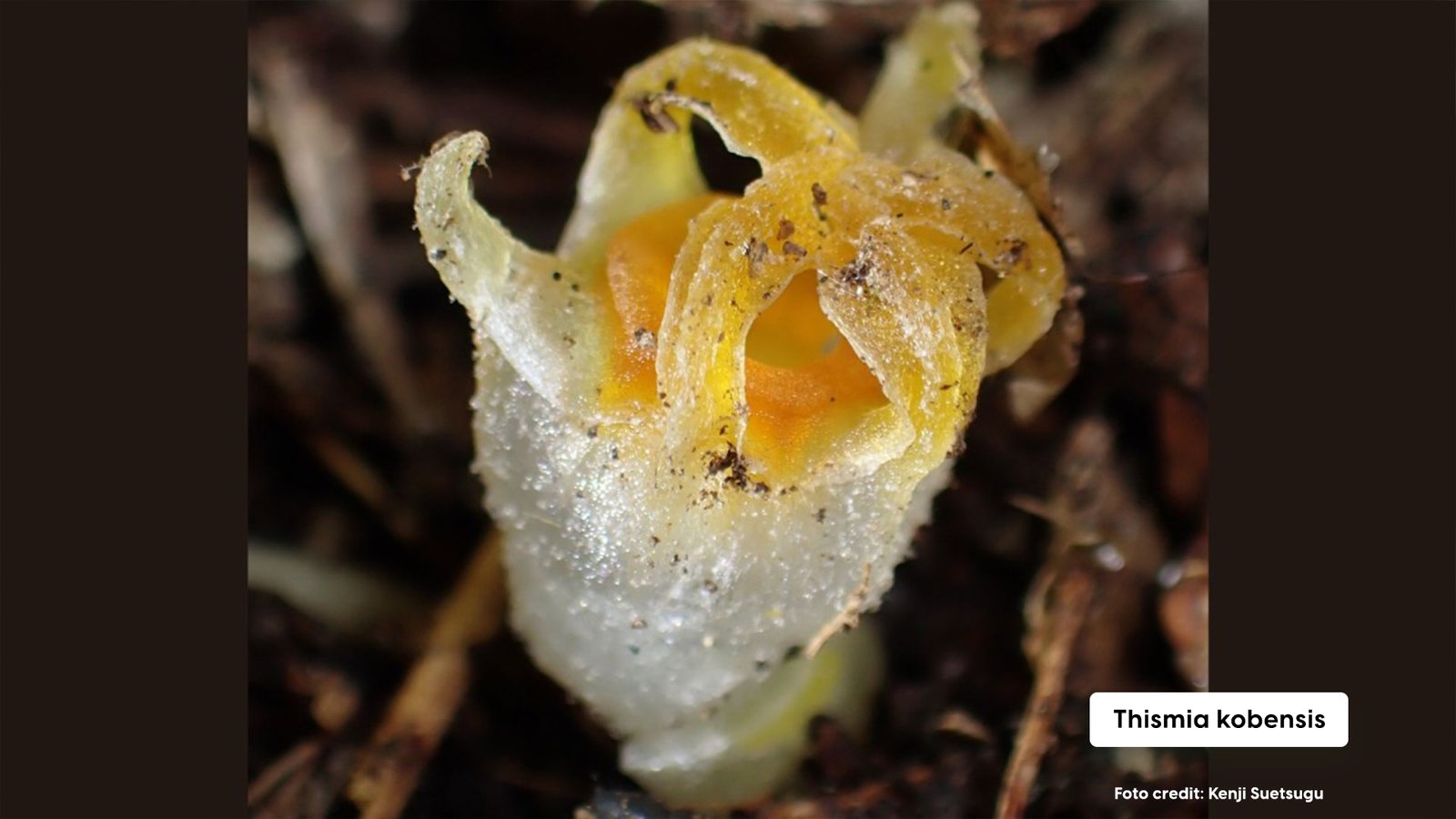
The genus Thismia, also known as «fairy lantern», is made up of around 90 species, has an unusual appearance and what makes it truly peculiar is the fact that it does not carry out chlorophyll photosynthesis. To overcome the problems relating to the lack of photosynthesis processes, these plants have evolved as parasites, developing symbiotic relationships with other organisms, exploiting mycoheterotrophy, a particular process that allows nutrients to be removed from the fungi that come into contact with their roots.
«Because most mycoheterotrophic plants obtain their carbon indirectly from photosynthetic plants through shared mycorrhizal networks, they are highly dependent on the activities of both the fungi and the trees that support them. As a result, they are particularly sensitive to environmental disturbances, making them often rare and endangered”.
study published on Phytotaxa
They are very rare and elusive plants capable of grow only in specific placeshidden underground they bring out translucent flowers. They have a transparent and phantasmagorical appearancevery distant from what is commonly connected to the idea of a plant. Precisely because of these characteristics it is sometimes difficult to determine with certainty whether a species is extinct or not, in fact, having a dwarf habit, flowers that bloom for a short time (usually in humid seasons) and being often covered by fallen leaves, they are probably not able to survive for long periods, it is also difficult to understand if they are plants that we will be able to see another time (an example is T. neptunis Beccari, which was rediscovered after 151 years!).
The strange case of Thismia kobensis
Thismia kobensis, part of the Thismia genus, Burmanniaceae family, is one of the least known but most fascinating members. Discovered in the city of Kobe (Japan), in 1992 it was thought to have become extinct following the destruction of its natural habitat, which became an industrial area in 1999. But, as a surprise, 30 years later, Professor Kenji Suetsugu and his colleagues, about 30 km away from its place of origin, in Sanda City, found specimens of this incredible plant.
It is a herbaceous species, with a creamy white vermiform root system. When it flowers it takes on a almost ethereal appearanceit develops a stem of about 4 cm, with 3 or 5 leaves, triangular in shape, tending towards whitish. The flowers, however, can be from 1 to 3 per plant, with 6 tepals fused to form a partially transparent calyx. Particular are the thread-like appendages about 4.5 cm long which branch out like the antennae of an orange/brown insect.
But it’s his vulgar name’fairy lantern‘ which describes one of the most fascinating aspects of these shy monocots lies in the translucent flower and halloweeny growing just above the soil surface.
Except for the flower, the plant has an underground habitat and this also means that it can be confused with a mushroom.
This is not the case but the mushrooms somehow make sense, as we said before. The fulcrum of life on earth is obviously carbon but the organic carbon that this plant cannot produce through photosynthesis must be ‘stored’ by someone.
In fact, Thismia is an underground plant that does not know how to take carbon from other plants, so it prefers to bind to mycorrhizae that manage to interface with the roots of some trees: it is most often a symbiosis where the fungus (which does not photosynthesize) receives carbon from the plant and in exchange helps it absorb water, minerals and other compounds.
Thismia then allows itself to be reached by the mycelium of a mycorrhizal mushroom and it uses its hyphae as a bridge between the tree from which to steal carbonwithout obviously giving anything in exchange.
For this reason Thismia are heterotrophic mico plants. Like many others mycoheterotrophic plants they are therefore strongly dependent on the activity of both the fungi and the trees that support them. Accordingly, they are particularly sensitive to environmental disturbanceswhich often makes them rare and endangered.
A new evolution
It is not often that you are lucky enough to go from studying an incomplete museum specimen to having a still viable plant in your hands, which is why Japanese scientists immediately set to work to update the description of Thismia kobensis, distinct from similar species such as Thismia huangii.
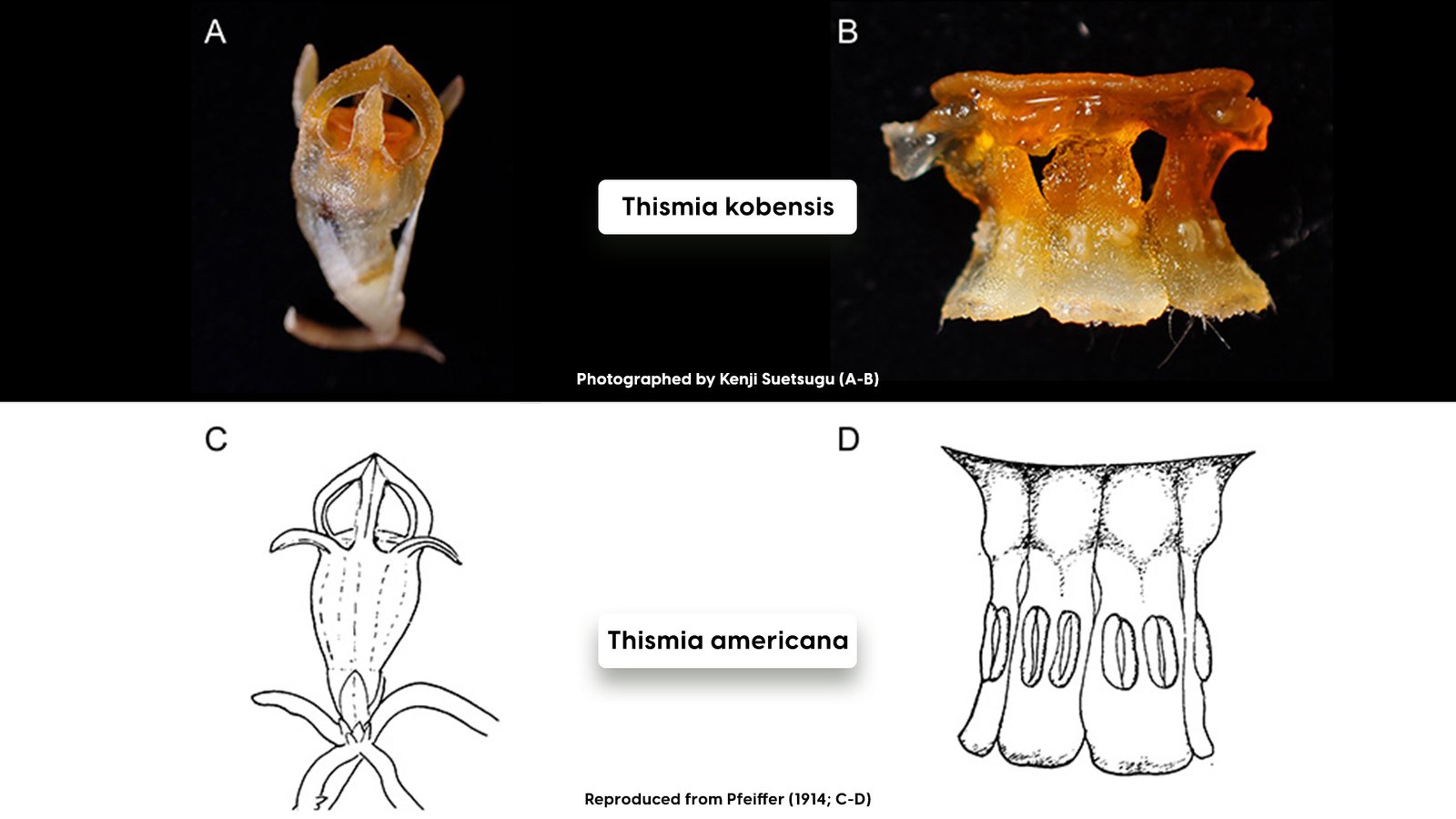
“Our morphological review revealed that T. kobensis is distinguishable from T. huangii by its short but expanded ring and many short filaments on each stigma lobe. We also demonstrated that the genetic distance between these taxa is comparable to that between other pairs of closely related species, the researchers continue.“
study published in Phytotaxa
Relatives around the world
The biogeography of Thismia kobensis has always intrigued scholars precisely because of its particularity and the difficulty in understanding its actual movement around the Earth. An example of this is Thismia americana, discovered more than 100 years ago in North America, the only species of Thismia present in those territories, it was present for a while near Chicago but is now considered extinct. What a predominantly tropical plant was doing in North America is still a mystery, especially since what – until recently – was considered its closest relative was Thismia rodwayi, located in Australia and New Zealand. In short, around the corner.
However, after the discovery of T. kobensis, a detailed morphological investigation led us to understand that it was it and not rodwayi that was a close relative of T. Americana. In fact, T. Americana may not even be related to the species from Australia and New Zealand. It may seem like a rather unlikely connection but instead it can be attributed to migration across the Bering Strait Bridge.
latest posts published

4 ideas to protect a summer kitchen from the sun

Why choose a roll-up pool cover? Advantages and disadvantages

12 questions/answers on swimming pool filtration

Transform your garden into a bohemian and natural corner

Organize your balcony and terrace with a small garden furniture

Volcania EDA flowerpots to decorate your terrace or balcony

Which XXL pots to choose for an olive tree or a palm tree?

Our Top 3 for perfect lighting!

Which above ground pool should I choose based on my needs and budget?