
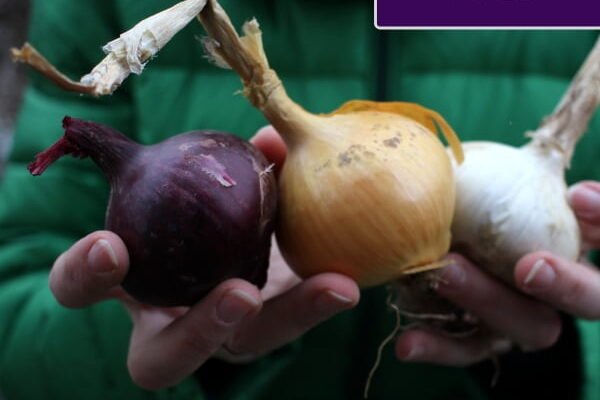
There are vegetables that we still don’t buy from the store. Winter vegetables are mainly late varieties, stored in the right conditions. We keep some at home, some in the basement, and some wait their turn in the greenhouse. Watch:
Now that it’s time to choose what to grow in the spring, I want to focus on late-season vegetables. Don’t just think about the early harvest: you need to allocate space in the garden for the late harvest too. Here are some concrete ideas.
Vegetables in winter: factors that determine success
How long you will eat vegetables depends mainly on two things:
1. You have chosen varieties suitable for long-term storage,
2. Adequate conditions are present for their conservation.
The characteristics of the species or variety indicate whether the vegetable can be stored for a long time. For example, early carrots ripen quickly, are juicy, but quickly wilt. Late carrots are larger, their harvest is much later, but they also keep for a long time.
On the packaging of pumpkins it is often clearly written: «winter pumpkins». Well, at least on the second side of the package it says up to which month it can be stored during the winter. Same with cabbage, tomatoes, leeks. So the first thing is to choose a vegetable suitable for long preservation.
As for storage conditions, you either already have them here or you don’t. We’re talking mostly about the basement.
So let’s take a look at where I keep my vegetables.
Vegetables in the cellar in winter
The basement, where the temperature is lower, but not below freezing, is the ideal place to store potatoes, beets and carrots. Carrots can be stored in boxes with sand – this will reduce excess moisture.
Leeks can also be stored in the cellar, especially if the winter is very cold.
I keep winter onions and garlic in my cellar, but this is an unusual solution, as cellars tend to be damp. My basement is very dry, so the microclimate here is perfect for them: until February these vegetables survived perfectly: they did not wither, dry out or rot. There wasn’t much onion and garlic left, so I put them in a common box, even though they should be kept separate.
Not everyone has already seen braids of onion or garlic hanging on the terrace near the stove. This storage method makes sense: it is a dry place in the room, and the heads themselves are ventilated. So the most important rule here is a dry place. A cooler room temperature is better, but it is not the most important element.
Store pumpkins over the winter
We need lots of pumpkins! I often use them in various dishes and my mother uses most of the pumpkins to prepare pies: whenever we have the opportunity we serve them to visitors to our gardening courses. Often they don’t even know they’re pumpkin pies until I tell them!
We grew different pumpkins: I invite you to read about interesting pumpkin varieties in another article (Click here). We have kept some pumpkins that we bought a long time ago and that we multiply every year, so I can no longer say the varieties.
And here are the big bright orange pumpkins. The seeds inside are without shell. This is important if you like pumpkin seeds because you will no longer need to shell them. The only drawback is that the bark of these pumpkins, stored until February, is very hard, so it is difficult to cut it. However, the inside of the pumpkin itself is super soft and very tasty! Pancakes, baked stews – really delicious!

Not all pumpkins are suitable for winter storage – read the label about this.
We store pumpkins in the room, the most important criterion is that the room is dry. The pumpkins have kept very well and will last even longer unless we eat them.
Winter tomatoes
We grew many and varied tomatoes (you can see an overview of last year’s tomato harvest found here). We grew several varieties to test how they would survive the winter. Unfortunately, we are not very satisfied with the results of the first year’s experiment.
The Pienolo del Vesuvio cherry tomatoes had to be the best result: I heard so many positive reviews about them. In summer they were hard, crunchy and extremely sweet. And in fact they were just as beautiful red even on New Year’s Eve, when we ate the last ones. They held up well until then, but they had already lost that crunchiness and sweetness.
Winter tomatoes ‘Zelionaja biudionovka’ look very photogenic in February, don’t they?
They are still hard, firm, but practically tasteless. While it’s possible to claim that taste in February, I’ve already begun to doubt it altogether.
In most cases, the seeds of this tomato variety germinate inside the tomato, then some stickiness and additional taste appear, so it doesn’t really increase the appetite. It’s unpleasant to eat one, just use it for stews. It is obvious that we will remove this breed from the breed list for next year.
We have another winter tomato that I received as a gift. It was supposed to be a «Vesuvio Giallo» variety, but judging by the leaves and other characteristics it is probably a «Ponderosa» tomato. They were the last ones we grew, but they resisted well even in February.
Externally they are almost colorless, but when cut you can see the fun orange pulp. The taste is not very bright, but unpretentious, so it is perfect for winter salads.
A week after filming the video review, I was a guest, where they fed me some dark red cherry tomatoes, which were also preserved during the winter. It is a pity that the owners did not know the name of the variety – they were really tasty and juicy, as if they had just been picked from a bush. So these vegetables can be really tasty in winter: recommend tested and popular varieties in the comments of this article so that I and other readers can try them.
Greenhouse vegetables in winter
Let’s go to a greenhouse where you can find edible things in winter!
The most important player on this field is a couple. This is not their first place of growth:
- We sowed leeks indoors on the windowsill,
- We then moved them to grow outside,
- With the onset of cold weather we moved them into the greenhouse
In the greenhouse, we dug up the leeks in the autumn and covered them with an agricultural cover.
If we had a really cold winter, we would take them out of the greenhouse, set them up, freeze them, and keep them that way through the winter.
However, in such a mild winter, leeks keep very well until February and will continue until we eat them.
But that’s not all in the greenhouse: after all, grass! They are always green, they are not afraid of frost at all, so you can prepare fresh pesto at any time. Surprising. And while it’s winter like this, curly sedges grow at their best outdoors.
latest posts published

How the chair influences the decor of a space

Ideas for decorating your home for Christmas

Winter fabrics for home decoration: ideas and advice

Furnishing farmhouses and barns: rustic elegance in Tuscany

Flos Portugal luminaires: sophisticated Italian design
Pedrali Outdoor: the complete guide to Italian furniture and design

Rugs and carpets – Tailored elegance and comfort

Design of the layout of the Miramaia Shopping Food Court

Comfortable chair or correct posture?